Background
As part of my Marketing 295 course, our team developed a go-to-market strategy for a hypothetical Trader Joe's product launch. The assignment was straightforward: identify a gap in TJ's product line and build a plan to fill it.
But for me, this project became personal.
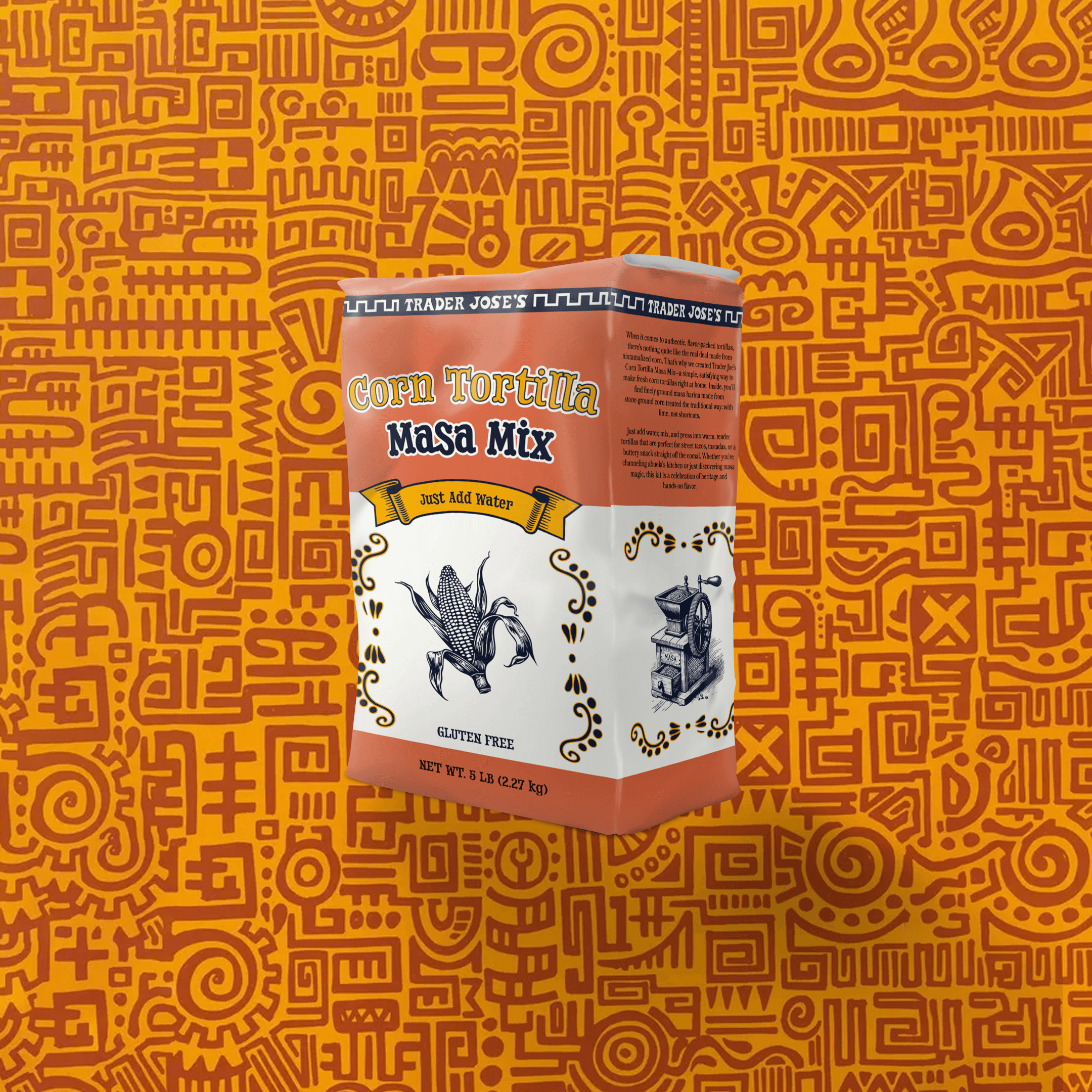
Growing up in a Mexican household, fresh tortillas weren't just food—they were tradition. I wanted to bring that authenticity to Trader Joe's customers who value quality ingredients but might not know where to start with Mexican cooking. That's how the Tortilla Masa Kit was born: stone-ground corn masa in a 5 lb. bag. Just add water, mix, and heat on a pan for restaurant-quality tortillas at home.
The challenge? Convincing health-conscious, culturally curious home cooks that making tortillas from scratch could be quick, affordable, and worth it.
Core problem
Trader Joe's is known for international and gourmet products, but they lacked an authentic, DIY Mexican cooking experience. Meanwhile, their target customer—educated, middle-to-upper class adults in urban/suburban areas—were actively seeking:
Authentic cultural food experiences
High-quality, simple ingredients (gluten-free, no additives)
Unique, community-oriented shopping moments
The masa kit needed to feel accessible, not intimidating. It had to fit Trader Joe's quirky, approachable brand while delivering genuine cultural value.
Market Research & Strategy:
I led the visual design for our 12-slide marketing plan, which included:
Target Market Segmentation: Defined psychographic, demographic, behavioral, and geographic profiles of our ideal customer
Positioning Strategy: "For mindful home cooks, Trader Joe's Masa Kit offers an authentic DIY tortilla experience—quick, fun, and full of flavor"
4 P's Framework: Product (masa kit with real stone-ground corn), Price (value-based to match TJ's reputation), Place (exclusive to TJ stores + online pickup), Promotion (in-store demos, social media, new product displays)
Design & Brand Execution:
I designed all presentation slides and created branded mock-ups using Trader Joe's visual identity guidelines:
Warm, earthy color palette (reds, creams, hand-drawn illustrations) to evoke tradition and authenticity
Hand-drawn corn stalks and masa grinder illustrations on packaging
Bold, rustic typography aligned with TJ's quirky-yet-approachable tone
Simplified instructions: "Just Add Water" and "Gluten Free" callouts for quick understanding
Mock-up of in-store "NEW" product display with complementary items (salsa, guacamole)
Launch Timeline & Roles:
The plan outlined a phased rollout with clear team responsibilities:
Finalized packaging design
Controlled launch at select stores for testing
Organic content creation (Fearless Flyer features, Instagram posts, recipe cards)
New arrivals display with complementary products to drive cross-sales
Success Metrics:
We defined KPIs to track performance:
Sell-through rate (product flying off shelves = successful strategy)
ACV/numeric distribution (stocking levels across locations)
Retailer and consumer feedback loops for product iteration


Results and Impact
Our marketing plan received top marks for its depth of research, cultural authenticity, and visual execution. The professor specifically highlighted how our branding felt "indistinguishable from an actual Trader Joe's product."
Skills Demonstrated:
Market segmentation and consumer behavior analysis
Brand identity design within strict guidelines
Cross-functional team collaboration (marketing strategy, production logistics, retail execution)
Culturally informed product positioning
Personal Impact:
This project proved I could take something deeply personal—my Mexican heritage—and translate it into a data-driven, commercially viable marketing strategy. It wasn't just about selling a product; it was about making authentic culture accessible, affordable, and fun for people who might never have tried making tortillas from scratch.